
Loading...
Serving Thousand Oaks, CA and surrounding areas. (805) 906-7342
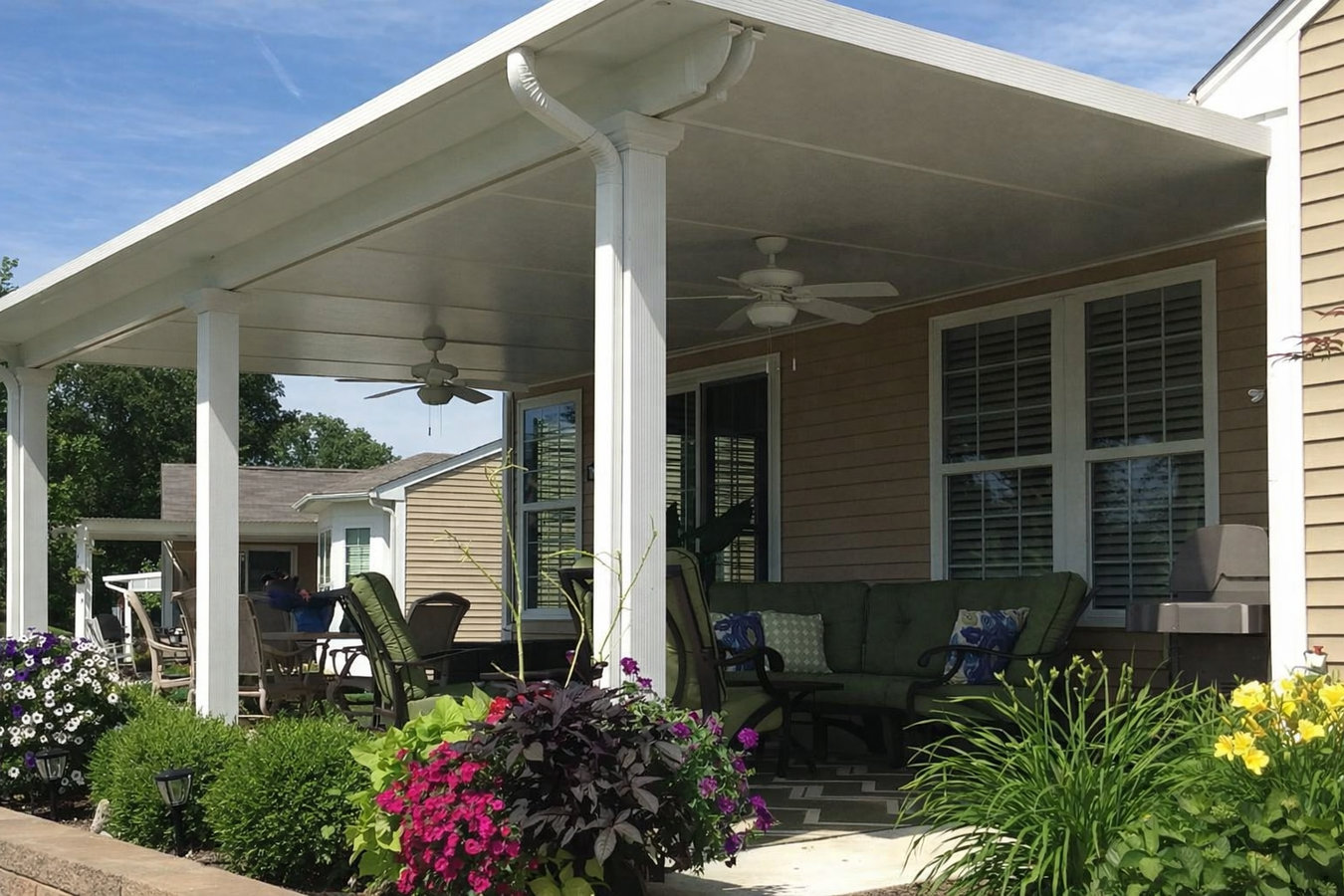
Your backyard sits empty all summer because there is nowhere to escape the Conejo Valley sun. A properly built, permitted patio cover gives you shaded outdoor space that works from May through October - and holds up through Santa Ana wind season too.
Patio cover installation in Thousand Oaks means attaching a permanent roof-like structure to the back of your home that shades your outdoor space - most projects take four to eight weeks from contract to final inspection, with city permit review accounting for the majority of that timeline and the actual construction taking one to three days. A patio cover can be open on the sides like a pergola with a solid roof, or enclosed to create a more protected space. If you are thinking about going further than shade alone, our patio enclosures page covers the full range of options from an open cover to a fully enclosed room.
The most important detail most homeowners do not know going in: any permanent patio cover attached to your home in Thousand Oaks requires a building permit, and many neighborhoods also require HOA architectural review approval before a permit can be filed. A contractor who suggests skipping the permit is putting you at risk - an unpermitted structure can create serious complications when you refinance or sell your home, and the city can require you to take it down. The California Department of Housing and Community Development publishes the building standards that govern this type of residential construction statewide.
Material choice matters more than most homeowners expect. Aluminum is low-maintenance and holds up well in Thousand Oaks' dry, sun-intense climate. Wood can be painted or stained to match your home's exterior and looks beautiful, but needs more upkeep over the years. Vinyl sits in between - it will not rot or need painting, but it has fewer style options. We walk through all three with every homeowner during the design conversation.
If you step outside between 10 a.m. and 6 p.m. from May through October and immediately want to go back inside, that is the clearest sign your outdoor space needs shade. In Thousand Oaks, the combination of intense sun and valley heat means an uncovered patio is essentially off-limits for half the year. A solid-roof cover can drop the perceived temperature under the structure noticeably and give you back those hours.
When direct afternoon sun hits your home's exterior wall and glass doors for hours every day, it fades finishes, heats up your interior, and makes your air conditioner work harder. If you have noticed fading on your door frame, flooring near the back door, or furniture inside the room that faces the backyard, a patio cover would block that sun before it reaches the house.
Constant UV exposure in the Conejo Valley is hard on outdoor materials. If your cushions are fading within a season or two, or your grill cover is cracking, that is a sign your patio is getting more direct sun than most outdoor products are designed to handle. A solid-roof cover dramatically extends the life of everything underneath it.
In Thousand Oaks neighborhoods where outdoor living is a selling point, a bare concrete slab with no shade structure can make a backyard feel incomplete to buyers. If you have noticed that homes nearby have covered patios and yours does not, adding one before listing is a practical improvement that buyers in this market consistently notice - especially when the cover is permitted and shows up cleanly in disclosure documents.
The right patio cover depends on how you plan to use the space, what your HOA allows, and what material will look best against your home's exterior. We build attached solid-roof covers - the most popular choice in Thousand Oaks because they provide full shade and light rain protection while creating a natural indoor-outdoor flow from your living room or kitchen. For homeowners who want filtered light rather than full shade, we also build lattice-style covers that let some sun through while still cutting the intensity of a Thousand Oaks afternoon. If your goal is to eventually enclose the space, our sunroom design service can help you plan a cover that is compatible with a future enclosure - so you are not tearing out posts and footings two years later.
We also build freestanding covers for homeowners who want a shade structure away from the house - near a pool, over a dining area, or anywhere a roofline attachment is not practical. Every project includes permit management with the City of Thousand Oaks, HOA submission support for neighborhoods that require it, and proper structural anchoring for Santa Ana wind conditions. For homeowners who want a fully enclosed outdoor room rather than an open cover, our patio enclosures service builds glass or screen walls that turn a covered patio into a fully protected space.
The most practical choice for Thousand Oaks summers - blocks direct sun and keeps light rain out, attached to the back of your home.
Lets filtered light through while cutting the sun's intensity - suits homeowners who want a more open feel and lower maintenance than wood.
Built away from the house over a pool, dining area, or open yard space - suits homeowners where a roofline attachment is not practical.
Thousand Oaks sits in the Conejo Valley, where summer afternoons regularly reach the mid-to-upper 90s and the sun angle is intense for most of the year. Shade here is not a nice-to-have - it is what makes your backyard usable for more than four months of the year. A solid-roof cover is usually the more practical answer for Conejo Valley homeowners, but the right material and structural approach depend on your specific yard layout, roofline, and HOA rules. Santa Ana wind events - which can gust above 50 miles per hour in the Conejo Valley each fall and early winter - are a real factor in how your cover should be anchored. A properly engineered cover with correctly sized footings and secure wall attachments handles those winds without issue. Homeowners in Camarillo face similar wind exposure and permitting requirements, and the structural principles that apply there apply equally in Thousand Oaks.
Many Thousand Oaks homes were built in the 1970s through 1990s and have mature trees, established landscaping, and older concrete patios already in place. This can affect where posts can be placed, whether existing concrete needs to be cut or replaced, and how the crew accesses the work area. HOA restrictions add another layer - a large share of Thousand Oaks neighborhoods have design approval processes that govern exterior color, roof style, and materials before a city permit can be filed. Homeowners in Oxnard and other parts of Ventura County deal with similar permitting workflows, but the specific HOA landscape in Thousand Oaks is something only a contractor with local experience will navigate without delays. We walk your yard with you during the estimate to flag any trees, irrigation lines, or existing structures that could affect the layout or cost.
We respond within one business day. We will ask a few basic questions - the size of your patio area, whether you have an HOA, and what you are hoping to use the space for. This helps us prepare for the site visit so we can give you useful answers, not just a generic price range.
We come to your home to look at the space in person. The layout of your home, the roofline, any existing landscaping, and your HOA guidelines all affect the design and price - a photo or description is not enough to give you an honest number. No obligation at this stage.
Once you approve the design, we submit the permit application to the City of Thousand Oaks on your behalf. If your neighborhood has an HOA, we prepare that submission at the same time. City review typically takes two to six weeks. We keep you updated so you are never left wondering where your project stands.
Most standard patio covers go up in one to two days. We set the posts and footings, build the frame, and attach the cover to the house with proper flashing to seal the joint. After the inspector signs off, we walk you through the finished structure and explain any routine maintenance the material requires.
No commitment required. We come to your home, look at the space, and give you a written proposal with a clear price and honest timeline - no pressure.
(805) 906-7342We handle the city permit application and the HOA submission as part of every project. The City of Thousand Oaks Community Development Department is the office that issues permits and sends inspectors - we work with them regularly and know what complete documentation looks like so your application does not come back with requests for revisions.
Every patio cover we install is engineered and anchored to handle Santa Ana wind conditions. Posts are set in concrete footings that meet the depth requirements for this area, and the wall attachment is secured into the structural framing of the house - not just the siding. The city inspector verifies this before the project is considered complete.
Many Thousand Oaks neighborhoods have architectural review committees with strict rules about cover materials, colors, and roof height. We ask about your HOA before we design anything and help you submit the right documentation so you are not redesigning halfway through. Homeowners in communities with monthly board meetings cannot afford to get that submission wrong on the first try.
The most common failure point on a poorly installed patio cover is the joint where the cover meets the house wall. We install metal flashing at that junction on every project, sealing it against water intrusion. The California Contractors State License Board verifies that any contractor doing this work holds a valid state license - you can confirm ours before you hire us.
We have built a straightforward reputation in Thousand Oaks and the Conejo Valley by doing the work correctly the first time and being honest about timelines, costs, and what each homeowner's situation actually requires. A valid California Contractors State License Board license is the baseline - every contractor doing this work in California is required to hold one, and you can verify it yourself in about thirty seconds before you hire anyone.
Custom-designed enclosed sunrooms built around your home's architecture - the natural next step for homeowners who want to fully enclose a covered patio.
Learn MoreGlass or screen walls added to a covered patio to create a fully enclosed outdoor room - more protection than a cover alone without the cost of a full sunroom addition.
Learn MorePermit season fills up fast - lock in your project before the Conejo Valley summer heat arrives and your backyard becomes unusable again.