
Loading...
Serving Thousand Oaks, CA and surrounding areas. (805) 906-7342
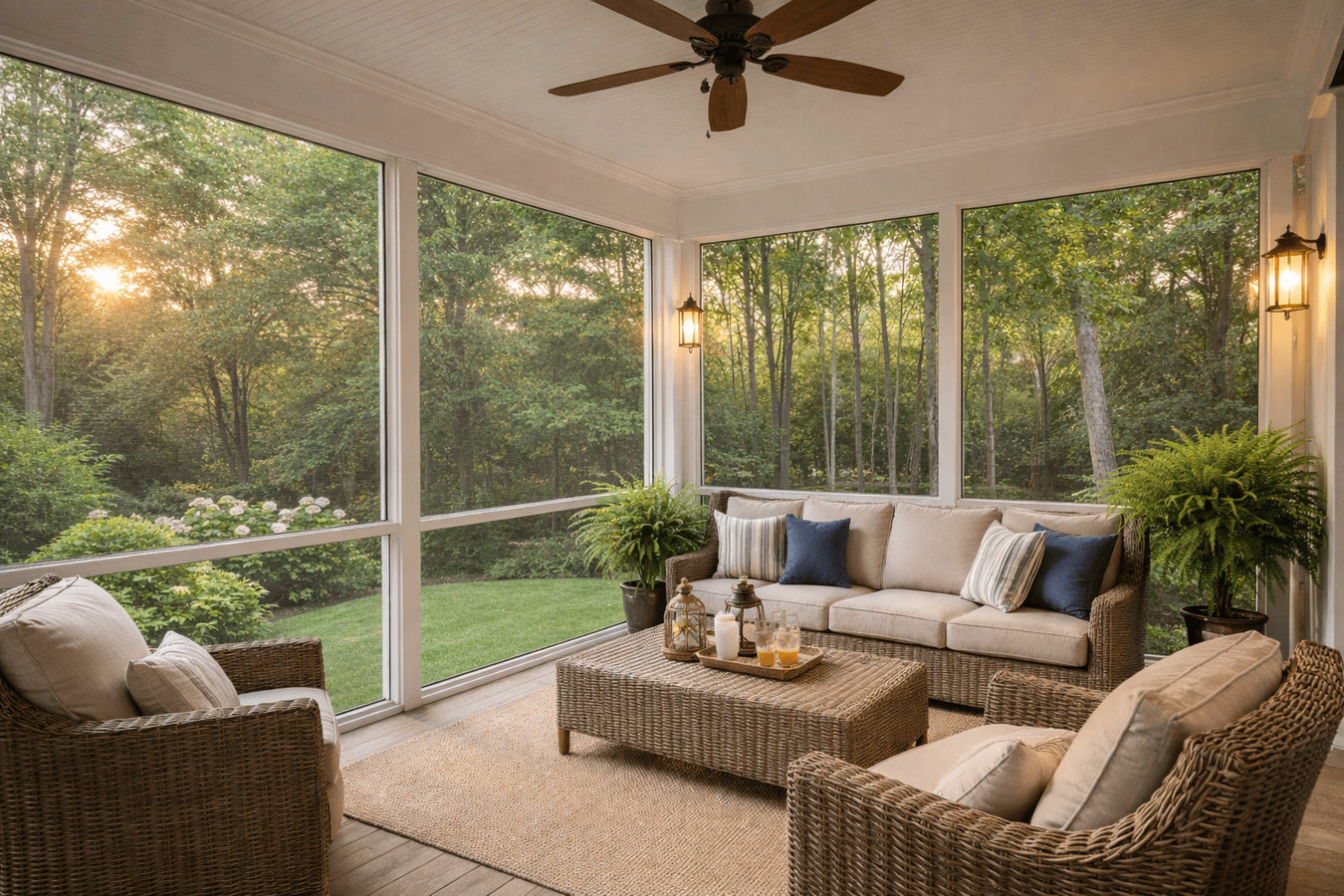
Insects, afternoon heat, and Santa Ana winds keep you indoors. A properly built screen room gives you fresh air, shade, and a wind-free outdoor space - fully permitted and built to last in the Conejo Valley.
Screen room installation in Thousand Oaks involves building an aluminum or wood-framed enclosure around your existing patio slab, covering all sides and the roof with screen mesh - most installations on an existing slab take two to five days of construction once permits are in place. If you are weighing whether a screen room or a full enclosed sunroom makes more sense for your situation, our patio enclosures page covers the full range of options from screen-only to glass-walled builds.
A screen room is not the same as a sunroom. There is no glass, no insulation, and no climate control - what you get is full enclosure on all sides with screen panels that keep insects and debris out while letting air move freely. That combination is genuinely useful in Thousand Oaks, where the climate is mild enough that a well-shaded, well-ventilated outdoor room is comfortable from early spring through late fall and often through the winter as well.
Thousand Oaks has roughly 284 sunny days per year, which means your outdoor space is genuinely usable for most of the year - if insects and afternoon heat are not getting in the way. For context on how outdoor enclosure structures are built and regulated, the North American Deck and Railing Association (NADRA) is the leading trade body for outdoor structure contractors and a useful reference for quality standards.
If you find yourself going indoors within minutes of sitting down outside because of mosquitoes, gnats, or flies, a screen room solves that problem completely. Thousand Oaks sits near several creek corridors and green belt areas that support active insect populations in warmer months. A fully enclosed screen room lets you sit outside comfortably without bug spray or citronella candles.
If your west- or south-facing patio is uncomfortably hot by early afternoon from May through October, a screen room with a solid or shade-rated roof panel can cut that heat significantly. Thousand Oaks summer afternoons regularly reach the high 80s and 90s, and direct sun on an open patio makes it unusable for hours at a time. A screen room gives you shade and airflow together.
If fall and winter winds send your patio furniture sliding and fill your outdoor space with dust and leaf debris, a screen room acts as a windbreak while still letting air circulate. Many Thousand Oaks homeowners find they actually use a screen room more in fall and winter than they expected because the enclosure takes the edge off the wind without making the space feel closed in.
If your existing alumawood patio cover or wood pergola is showing its age - fading, cracking, or pulling away from the house - a screen room replacement is worth considering rather than a like-for-like repair. Many Thousand Oaks homes built in the 1980s and 1990s have original patio covers that are now 30 or more years old. A screen room gives you a fresh structure with a longer lifespan and the benefit of full enclosure.
Most screen room projects in Thousand Oaks start with an existing concrete patio slab - we anchor the aluminum frame to the slab and to your home wall, build out the roof structure, and install screen panels on each side. If you do not have a suitable slab, we can pour one as part of the project. We also handle all HOA paperwork for neighborhoods that require architectural review and file the city permit before any work begins. Homeowners who want to explore a fully enclosed option down the road can start with a screen room now and later upgrade through our patio-to-sunroom conversion service - the two projects are complementary.
Screen mesh selection matters more than most people realize before they start the process. Standard fiberglass mesh is the right choice if insects are your main concern and you want maximum airflow. Solar screen mesh is worth considering if afternoon heat on a west-facing patio is the bigger problem. If your home backs up to open hillside or brush, we walk you through ember-resistant mesh options - a genuine consideration in fire-hazard-zone neighborhoods throughout Thousand Oaks. All frame work is powder-coated aluminum, which holds up to Southern California sun without the maintenance demands of wood. For homeowners who want to understand frame and enclosure quality standards independently, the American Architectural Manufacturers Association (AAMA) publishes performance standards for enclosure systems that are worth reviewing.
Best for homeowners whose main priority is keeping insects out while maintaining maximum airflow. Cost-effective, durable, and the most common choice.
Suited to west- or south-facing patios where afternoon heat is the bigger problem. Blocks a meaningful amount of sunlight while still letting air move through.
Designed for homes near open hillside or brush in Thousand Oaks fire hazard zones. Reduces the risk of burning embers passing through the screen panels.
Thousand Oaks has roughly 284 sunny days per year, but those days are not all created equal. Santa Ana wind events hit each fall and early winter, and any screen room frame that is not properly anchored to the house wall and slab footings will flex and rattle - or lose panels entirely - the first time those gusts roll through. Homeowners in Thousand Oaks neighborhoods near open hillsides should also ask specifically about wind load ratings and ember-resistant screen options, since those areas see the strongest gusts and carry the most fire risk.
HOA prevalence in the Conejo Valley is high - a large share of established neighborhoods require architectural review before any outdoor structure is added. This step adds time to the project but is not optional. Homeowners in Westlake Village and nearby communities consistently find that HOA committees move faster when the submission package is complete and well-organized from the start. We handle that preparation as part of every project so you are not starting over after a rejection. Many Thousand Oaks homes also have mature oak and eucalyptus trees nearby - worth mentioning to your contractor because debris accumulation on the roof panels affects frame design decisions.
We ask a few questions about your patio size and what you want the room to do. You hear back within one business day. A site visit follows - we check the slab, the house wall, and any surrounding trees or obstacles before preparing your estimate.
Once you sign off on the design, we prepare and submit the city building permit application and, if your neighborhood requires it, the HOA submission package. Permit processing typically adds one to three weeks - we keep you updated so you are not left guessing.
The crew anchors the frame to your house wall and slab, builds the roof structure, and installs the screen panels on each side. Most installations take two to five days. You do not need to be home the entire time, but being available by phone is helpful if any design questions come up.
After installation, we schedule the required city inspection and handle any minor adjustments before sign-off. The job ends with a final walkthrough where we check every panel and latch with you and explain basic care for the screens and frame hardware.
Free on-site estimate. We handle the permit and HOA paperwork. No pressure, no obligation.
(805) 906-7342We pull the city building permit before installation begins. This means your screen room is officially on record with the City of Thousand Oaks - which protects your home's value and avoids the complications that unpermitted additions create at the time of sale.
Every frame we install is braced and anchored to handle the kind of wind gusts that roll through the Conejo Valley each fall. A screen room that rattles or loses panels in its first wind season is a sign of inadequate anchoring - we build for the conditions that actually exist here, not for a calmer climate.
A large share of Thousand Oaks neighborhoods require HOA architectural review before any outdoor structure is added. We prepare the submission package and manage the review process as part of every project - including follow-up if the committee has questions - so you are not navigating that process alone.
Southern California sun is hard on outdoor structures. All our frames use powder-coated aluminum, which resists rust and fading far better than painted wood over the decades. A professionally built aluminum screen room can last 20 to 30 years with minimal upkeep - verify any contractor you hire holds a current California license at cslb.ca.gov.
A permitted structure, properly anchored for wind, built with materials that hold up in the sun - that is the combination that makes a screen room worth the investment in the Conejo Valley. It is also the standard we hold every project to, regardless of size - and a good baseline to use when comparing any sun porch builder you get a quote from.
Ready to upgrade from a screen room to a fully enclosed sunroom? A patio-to-sunroom conversion is the natural next step for homeowners who want year-round climate control.
Learn MorePatio enclosures cover the full range from screen-only builds to glass-walled, insulated rooms - useful if you want to compare options before committing to a screen room.
Learn MoreGet your free estimate now so your screen room is ready before the heat arrives - we handle the permit, the HOA, and the whole build.