
Loading...
Serving Thousand Oaks, CA and surrounding areas. (805) 906-7342
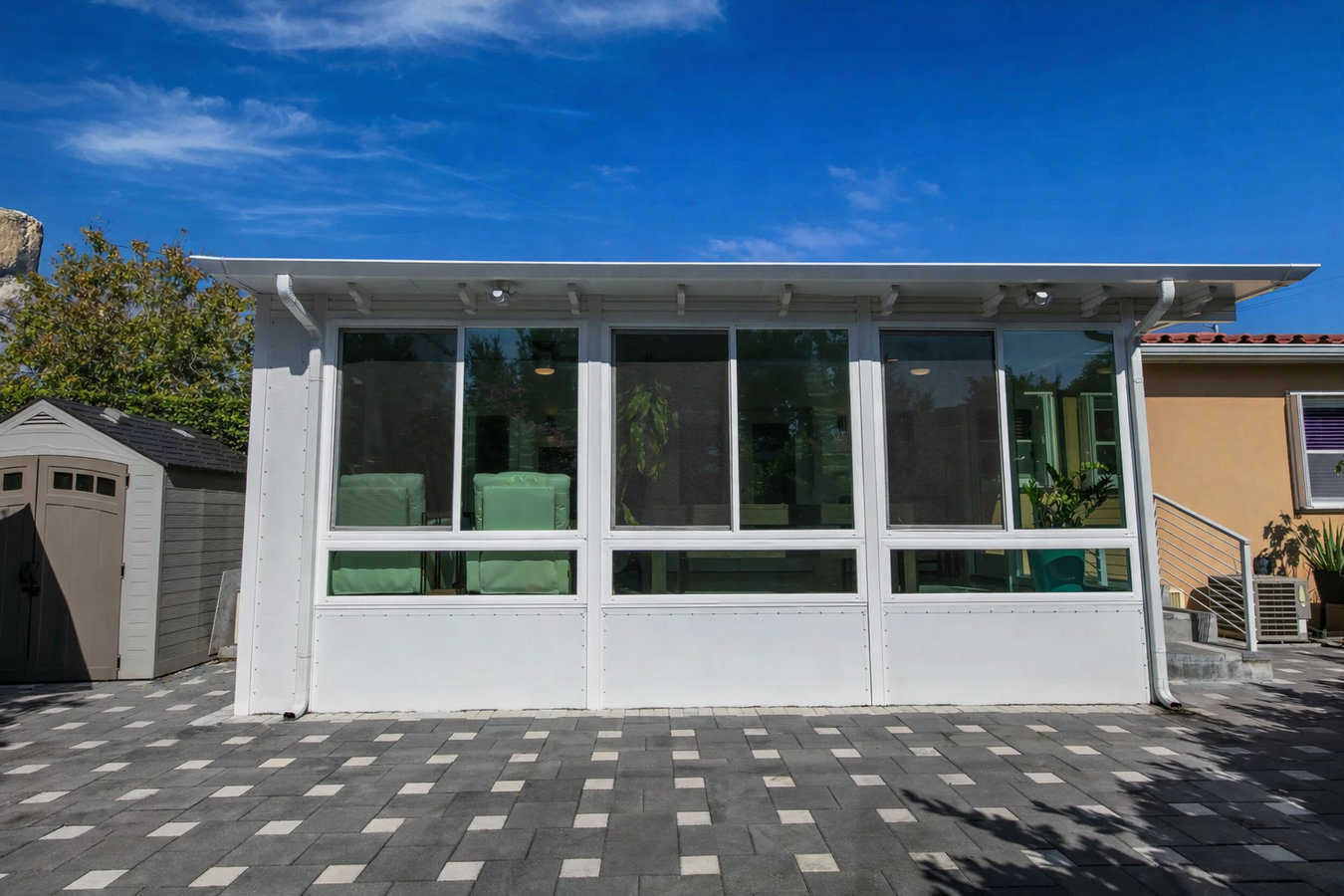
You want a room that connects your house to the backyard, holds up to the Conejo Valley sun, and does not require painting, sanding, or refinishing every few years. A properly built vinyl sunroom gives you all of that - and we handle the permits and HOA paperwork so you do not have to.
A vinyl sunroom in Thousand Oaks is a fully enclosed room addition attached to your home, built with a vinyl frame and large glass panels, and most installations are complete within six to ten weeks from contract to final city inspection - with the permit review accounting for the majority of that timeline. Vinyl holds its color without repainting, does not rust or corrode, and is lighter than aluminum, which matters for the foundation requirements. For most homeowners in the Conejo Valley, vinyl hits a practical sweet spot between cost, appearance, and maintenance. If you are also thinking about how the room is laid out and what glass will work for your backyard's sun exposure, our sunroom additions page covers the full range of addition types in more detail.
One detail that catches homeowners off guard: many Thousand Oaks homes were built in the 1970s through 1990s, and the existing patio slabs from that era may not meet current structural requirements for an enclosed room. A contractor who assesses the slab during the site visit - rather than assuming it can be reused - saves you from discovering that problem halfway through construction. We check every slab before we finalize a proposal, and we tell you upfront if it needs reinforcing or replacing.
The City of Thousand Oaks requires a building permit for any sunroom addition, and many neighborhoods throughout the Conejo Valley also require HOA architectural review before a permit can even be filed. The City of Thousand Oaks Building and Safety Division is the office that issues permits and sends inspectors to every project - we work with them on every job we build in the city.
Thousand Oaks gets intense afternoon sun for most of the year, and an open or screen-covered patio can become genuinely uncomfortable by midday from spring through fall. If you find yourself retreating inside rather than enjoying your outdoor space, a vinyl sunroom gives you that same connection to the backyard with shade, filtered light, and the option to add a ceiling fan or mini-split. It turns a space you avoid into one you actually use.
If your backyard feels like somewhere you walk out to rather than flow into, a sunroom creates a natural transition space between the house and the yard. This is especially noticeable in ranch-style homes common in Thousand Oaks where the back of the house is a single sliding glass door with nothing beyond it. A sunroom changes that relationship completely.
If the structure over your patio shows rust, cracked panels, torn screens, or water stains on the ceiling, that is a signal the space needs attention. Rather than repairing an aging enclosure that will need work again in a few years, many Thousand Oaks homeowners choose to replace it with a proper vinyl sunroom that will last two to three decades - and adds more value to the home than a repaired screen enclosure.
Thousand Oaks experiences Santa Ana wind events in fall and winter that make outdoor spaces dusty, dry, and sometimes smoky from regional fires. A fully enclosed vinyl sunroom lets you sit with a view of the yard and the hills without being exposed to the wind or air quality issues. For homeowners who love the look of the Conejo Valley landscape, this is one of the most practical reasons to enclose the space.
We build vinyl sunrooms as three-season enclosures - ideal for Thousand Oaks' mild climate and the most budget-friendly path to a new room - and as fully insulated four-season rooms with heating and cooling connections that can be used comfortably every day of the year. Both start with UV-stabilized vinyl framing and glass specified for your yard's sun exposure, because Thousand Oaks gets intense sun for most of the year and the wrong glass turns a room into an oven. Our sunroom additions page explains how a vinyl sunroom fits within the broader range of addition types, from a basic enclosure to a full room with finished flooring and built-in lighting.
Every vinyl sunroom project includes a site visit and foundation assessment, permit management with the City of Thousand Oaks, HOA architectural review coordination for neighborhoods that require it, and a final city inspection before we hand the room over. If your project also involves thinking through the layout, glass selection, and how the room connects to your existing roofline, our three season sunrooms page covers the lighter-build option in detail - useful for homeowners who want to compare what they actually need before deciding on a full four-season build. The National Association of Home Builders recommends getting a detailed written proposal before any work begins - that is standard on every project we build.
Built for spring, summer, and fall use - not insulated for cold weather, but a practical and cost-effective choice in Thousand Oaks' mild climate.
Fully insulated and climate-controlled - usable year-round, more likely to be counted as conditioned living space in a home appraisal, and the better investment for resale.
Many Thousand Oaks homes have patio slabs that can serve as the foundation after assessment - we check every slab before finalizing the proposal so there are no mid-project surprises.
Thousand Oaks averages about 284 sunny days per year, which means the glass and vinyl in your sunroom will be exposed to intense UV light for most of the year. That matters more here than it would in a cloudier climate - lower-quality vinyl can fade or warp, and glass without a proper coating can make the room uncomfortable by midday. We specify UV-stabilized vinyl framing and low-emissivity glass on every project, because those material choices are not optional in a Southern California climate. Homeowners in Simi Valley face the same UV and heat conditions across the valley, and we bring the same material standards to every project in the wider Conejo Valley area.
Parts of Thousand Oaks fall within Ventura County's fire risk zone designation, which can affect what materials and construction methods are required for exterior additions. If your property is in one of these areas, your contractor needs to use fire-rated materials or follow additional requirements - and that is worth confirming before a design is finalized, not after. We check every parcel's fire zone status early in the process. A large share of Thousand Oaks neighborhoods also have HOA architectural review requirements for any exterior addition, and those typically need to be completed before a city permit can be filed. Homeowners in Moorpark and neighboring communities know this process well - it is a standard part of any addition project throughout Ventura County.
We ask about the space you have in mind, whether you have an existing patio slab, and what you plan to use the room for. We schedule a site visit within a few days. This first conversation is low-pressure - you are not committing to anything. We reply within one business day.
We measure the space, assess the slab or foundation, check sun exposure and drainage, and note any HOA restrictions that apply. After the visit we provide a written proposal with a design, a price, and a realistic timeline.
We submit the permit to the City of Thousand Oaks and prepare HOA architectural review materials where required. This phase typically takes two to six weeks. We keep you updated throughout so you are never left wondering what is happening.
Foundation work and slab prep come first. Once cured, the vinyl frame goes up in two to five days, glass panels are installed, and electrical work is completed. The city inspector verifies the finished work, then we walk you through the room and explain any maintenance steps.
We come to your home, check the slab, review the sun exposure, and give you a written quote that covers permits and foundation work - no surprises, no obligation.
(805) 906-7342We manage the City of Thousand Oaks permit application and HOA architectural review submissions for every project. You receive a finished room that is fully permitted and approved - which protects you at resale and in any insurance claim situation.
Thousand Oaks gets about 284 sunny days a year. We specify UV-stabilized vinyl and low-emissivity glass on every project - not as an upgrade, but as the baseline - because those choices directly determine whether your room is comfortable in year one and still performing in year ten.
Many Thousand Oaks patio slabs from the 1970s and 1980s are not thick enough or properly anchored to support an enclosed room. We assess every slab during the site visit and tell you upfront what it can support - so cost surprises do not show up midway through construction.
Parts of Thousand Oaks fall within state fire risk designations that affect which materials are allowed for exterior additions. We check your parcel's fire zone status before finalizing any design - so the materials we specify will pass inspection and leave your home properly protected.
A vinyl sunroom that is properly permitted, built on a sound foundation, and framed with materials suited to the Thousand Oaks climate is a room that earns its place in your home every year - not just the first season after it is built.
See the full range of addition types - from a basic enclosure to a fully finished four-season room - to understand where a vinyl sunroom fits in the broader picture.
Learn MoreCompare the lighter-build three-season option side by side with a four-season vinyl room to decide what level of insulation and climate control your project actually needs.
Learn MorePermit slots fill up - the sooner we start the slab assessment and permit process, the sooner you are enjoying your new room.