
Loading...
Serving Thousand Oaks, CA and surrounding areas. (805) 906-7342
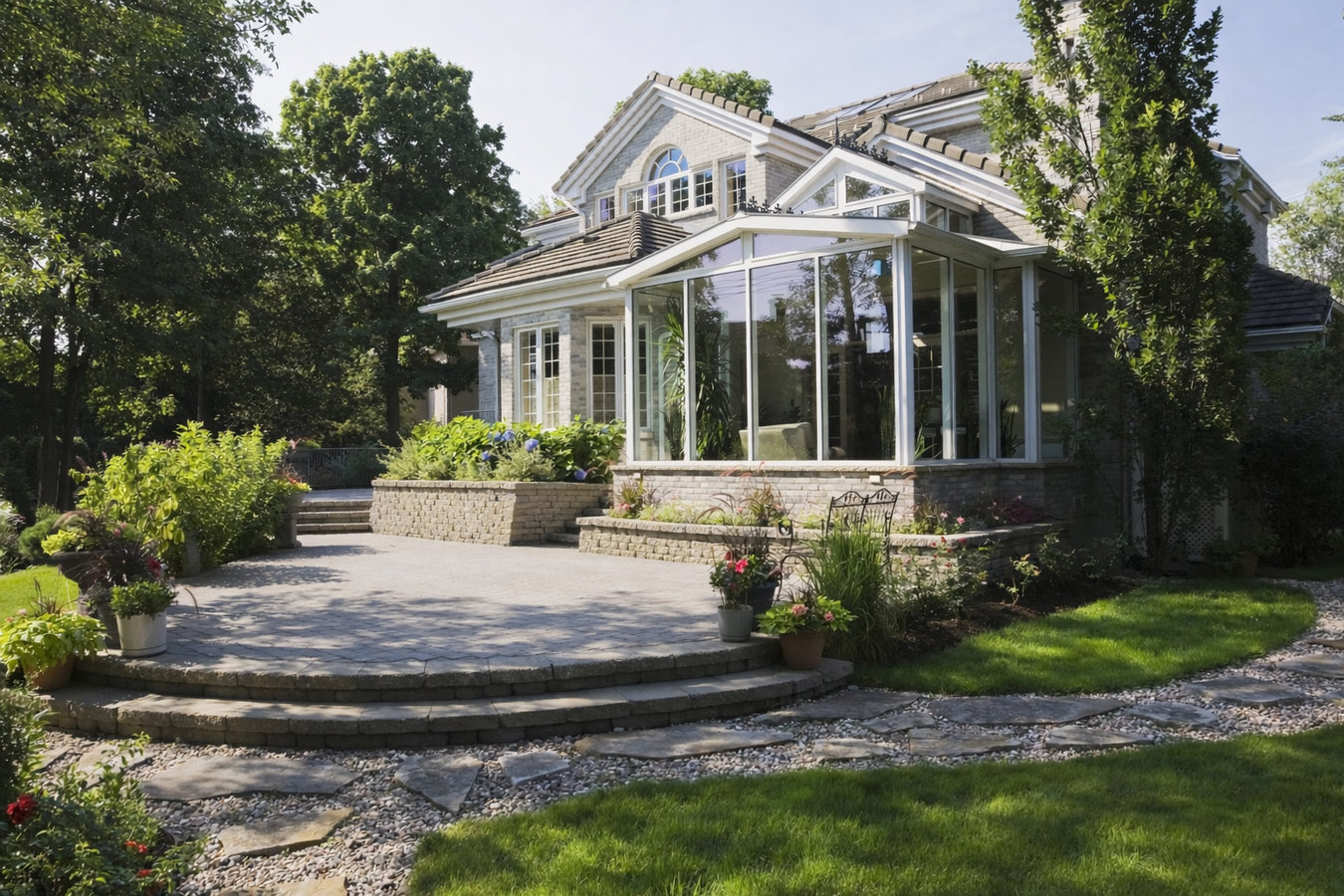
You want the brightness of the outdoors without the Conejo Valley heat. A properly built solarium with heat-managing glass gives you a fully enclosed, light-filled room you can enjoy every day of the year.
Solarium installation in Thousand Oaks means adding a fully glass-enclosed room to your home - with glass walls and a glazed roof that brings in natural light from every direction - and most projects take two to four months from first conversation to final inspection, with permit review accounting for the largest share of that timeline. Unlike a basic patio cover or screened porch, a solarium is a sealed, climate-controlled living space you can use on the hottest July afternoon or on a cool February evening. If you are deciding between a solarium and a more traditional enclosed room, our custom sunrooms page walks through the key differences in wall construction and glass options.
Most Thousand Oaks homeowners who call us about solarium installation are looking to solve a specific problem: they have a backyard they love but cannot use comfortably through the summer, or they need more living space without the disruption of a full interior remodel. A solarium is built largely from the outside, which means far less disruption to your daily routine than a traditional room addition. The U.S. Department of Energy guidance on window and glass technologies explains the heat-management properties that make quality solarium glass genuinely comfortable in a warm, sunny climate like Thousand Oaks.
One thing homeowners are often surprised to learn: solarium installation in Thousand Oaks involves two separate approval processes in most neighborhoods - a city building permit and, for homes governed by an HOA, an architectural review. We manage both, so you are never left navigating paperwork on your own.
If you step outside between 10 a.m. and 6 p.m. from May through October and immediately want to go back inside, your outdoor space needs shade and climate control. Thousand Oaks summers push into the mid-90s in inland areas, and an unshaded patio becomes uncomfortable by midday. A solarium with heat-managing glass gives you that outdoor brightness without the heat - so the space works for you in every season.
If you already have a patio cover or screen enclosure that lets in rain, overheats in summer, or feels flimsy when Santa Ana winds pick up, that structure was not built for year-round use. Those problems get worse, not better, with time. A properly installed solarium replaces that frustration with a sealed, weather-resistant room that holds up through every condition the Conejo Valley throws at it.
Many Thousand Oaks homes built in the 1970s through 1990s have layouts that do not take full advantage of the Southern California climate. If your living room or kitchen backs up to a yard you rarely use, a solarium creates a natural transition space that makes the outdoor environment feel like part of your daily life - not something you look at through a window.
If your family has outgrown your current square footage but a full room addition feels too disruptive or expensive, a solarium is often a faster and more affordable way to add a functional room. It can serve as a home office, a dining area, a playroom, or simply a quiet place to sit - and it adds real value to a home in a market where buyers consistently prioritize outdoor living features.
Every solarium project starts with an honest conversation about how you plan to use the room and what constraints - HOA rules, existing foundation, yard access, roofline - affect the design. From there we develop a plan that fits your home and your budget. For homeowners who want maximum light with a glass ceiling and glass walls on all sides, our solarium builds include insulated low-e glass panels, a thermally broken aluminum frame, proper concrete footings, and a connection to your home's existing climate control or a dedicated mini-split system. For those who want a related option at a lower cost, our patio cover installation service provides shade and weather protection without a fully enclosed glass structure.
We also build fully enclosed rooms that prioritize insulation over maximum glazing - our custom sunrooms offer more wall insulation and more design flexibility for homeowners who want something built specifically around their home's architecture. Every project we take on in Thousand Oaks includes permit management with the city's Building and Safety Division, HOA submission support for neighborhoods that require it, and a final walkthrough once the city inspector has signed off. The National Sunroom Association provides industry standards that guide how we specify glass, framing, and weatherproofing on every project.
Glass walls and a glazed roof for maximum light - suits homeowners who want the outdoor feeling with full climate control and weatherproofing.
A faster, more budget-friendly option for straightforward sites - suits homeowners who want a quality result without a fully custom build.
For homes where the existing slab or deck cannot carry the load - includes full foundation work for long-term structural stability.
Thousand Oaks averages over 280 sunny days per year, which makes a solarium an appealing addition and a genuine heat-management challenge at the same time. A contractor who understands the Conejo Valley climate will specify glass with strong heat-reflecting properties - insulated low-e units rather than plain glass - and will discuss roof overhang options and cooling solutions before the design is finalized. The clay-heavy soils in parts of Thousand Oaks and the surrounding valley also affect foundation requirements: soils that swell when wet and shrink when dry can stress a structure built on an undersized footing, so a proper site assessment is not optional here. Homeowners in Westlake Village and throughout the Conejo Valley have found that a solarium built without accounting for local soil and sun conditions often needs expensive repairs within a few years.
HOA communities are common throughout Thousand Oaks, and many of them - including planned neighborhoods in the hills and newer master-planned communities - have architectural review committees that must approve exterior additions before the city permit process can even begin. That two-step approval process is something a contractor from outside the area may not anticipate, leading to project delays that frustrate homeowners and push timelines out by months. Homeowners in Newbury Park face the same HOA and permitting landscape, and we handle both processes as part of every project we take on in the area.
We respond within one business day. During that first conversation we ask where on your home you are thinking of adding the solarium, roughly how large you want it, and what you plan to use it for - so the site visit is worth both our time and yours.
We visit your home, check the exterior wall and existing foundation, assess the soil conditions, and take measurements. This is also your chance to ask about HOA restrictions, glass options, and what the finished room will look like - no commitment required at this stage.
We prepare and submit plans to the City of Thousand Oaks Building and Safety Division. If your neighborhood has an HOA, we prepare the architectural review package at the same time. Permit review typically takes several weeks - we keep you updated throughout so nothing catches you off guard.
Once permits are in hand, we prepare the site, pour any needed footings, raise the frame, and install the glass panels and roof. For most residential solariums this phase takes one to three weeks. You will see the room take shape quickly once framing begins.
No commitment required. We will come to your home, assess the space, and give you a detailed written quote - no sales pressure, no obligation.
(805) 906-7342We handle the city permit application and, where required, the HOA architectural review submission as part of every project. Homeowners in Thousand Oaks and the Conejo Valley have two separate approval bodies to satisfy - we navigate both so you never have to make a call to the Community Development Department on your own.
Every solarium we build uses insulated low-e glass panels chosen specifically for Thousand Oaks heat levels. We discuss glass performance with every homeowner before design is finalized - not after - because a room that overheats by noon is not a room anyone will use. The U.S. Department of Energy confirms that low-e coatings can significantly reduce solar heat gain without blocking natural light.
Parts of Thousand Oaks sit on expansive clay soils that shift with moisture changes. We assess your specific site conditions and include any needed footing work in our proposal upfront - not as a surprise mid-project. A solarium built on the right foundation in Conejo Valley soil stays stable for decades.
Thousand Oaks falls within a state-designated fire hazard area, and any new exterior addition must use materials that meet California fire-resistant construction standards. We spec compliant materials from the start, so there are no mid-project surprises and your finished room meets both the city inspector's requirements and your homeowner's insurance expectations.
Every one of these proof points connects back to the same thing: a finished solarium that you can actually use, that will not create problems when you sell, and that holds up through the conditions specific to this part of Southern California. We have built a reputation in the Conejo Valley by being straightforward about what each project involves - and by delivering what we promise.
A shade structure attached to your home that protects your outdoor space from sun and light rain - a lower-cost alternative for homeowners who want coverage without full enclosure.
Learn MoreFully designed enclosed rooms built around your home's specific architecture - more wall insulation and design flexibility than a standard glass solarium.
Learn MorePermit slots and contractor schedules fill quickly in spring - call now to lock in your start date and be enjoying your new room before summer arrives.